
Building the Lunar Economy
How Astrolab is deploying autonomous rovers on the Moon with MetriCal
Autonomous Planetary Rovers
Key Takeaways
MetriCal enables mission-critical calibration for Astrolab's lunar rovers, reducing development time and allowing engineers to focus on flight-critical systems
MetriCal's comprehensive validation metrics provide quantitative confidence in calibration accuracy required for safe autonomous operations at the Lunar South Pole
Calibration infrastructure is now integrated throughout development and production workflows, supporting the 2026 FLIP mission deployment
The Mission
Humanity's return to the Moon represents one of the most ambitious engineering challenges of our generation. Success requires not just getting there but building the infrastructure for sustained operations on the lunar surface. At the center of this effort sits a fundamental technical challenge: autonomous rovers must navigate, avoid hazards, and conduct scientific operations in an environment where communication delays, extreme temperatures, and unknown terrain make Earth-based control impractical.
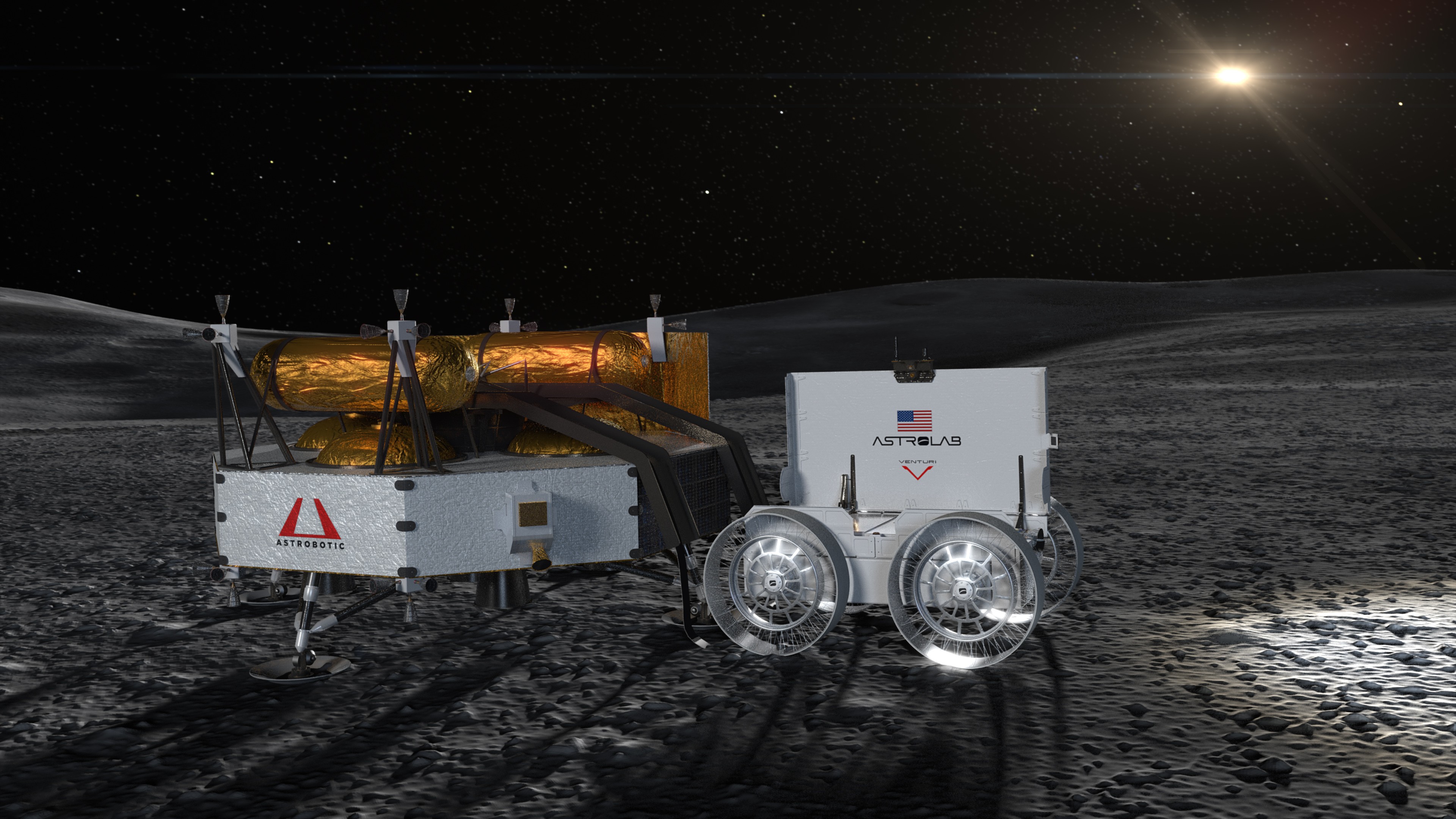
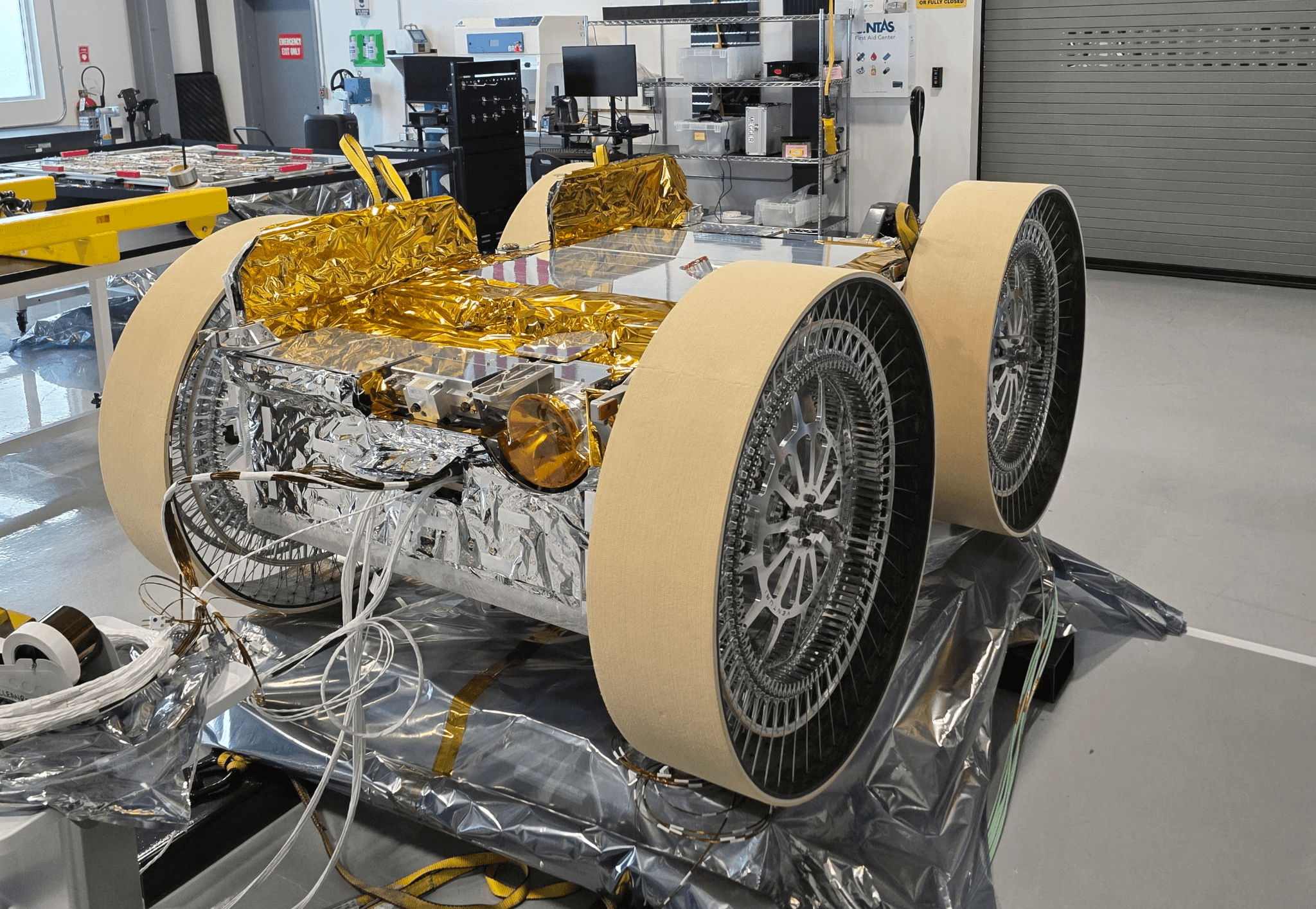
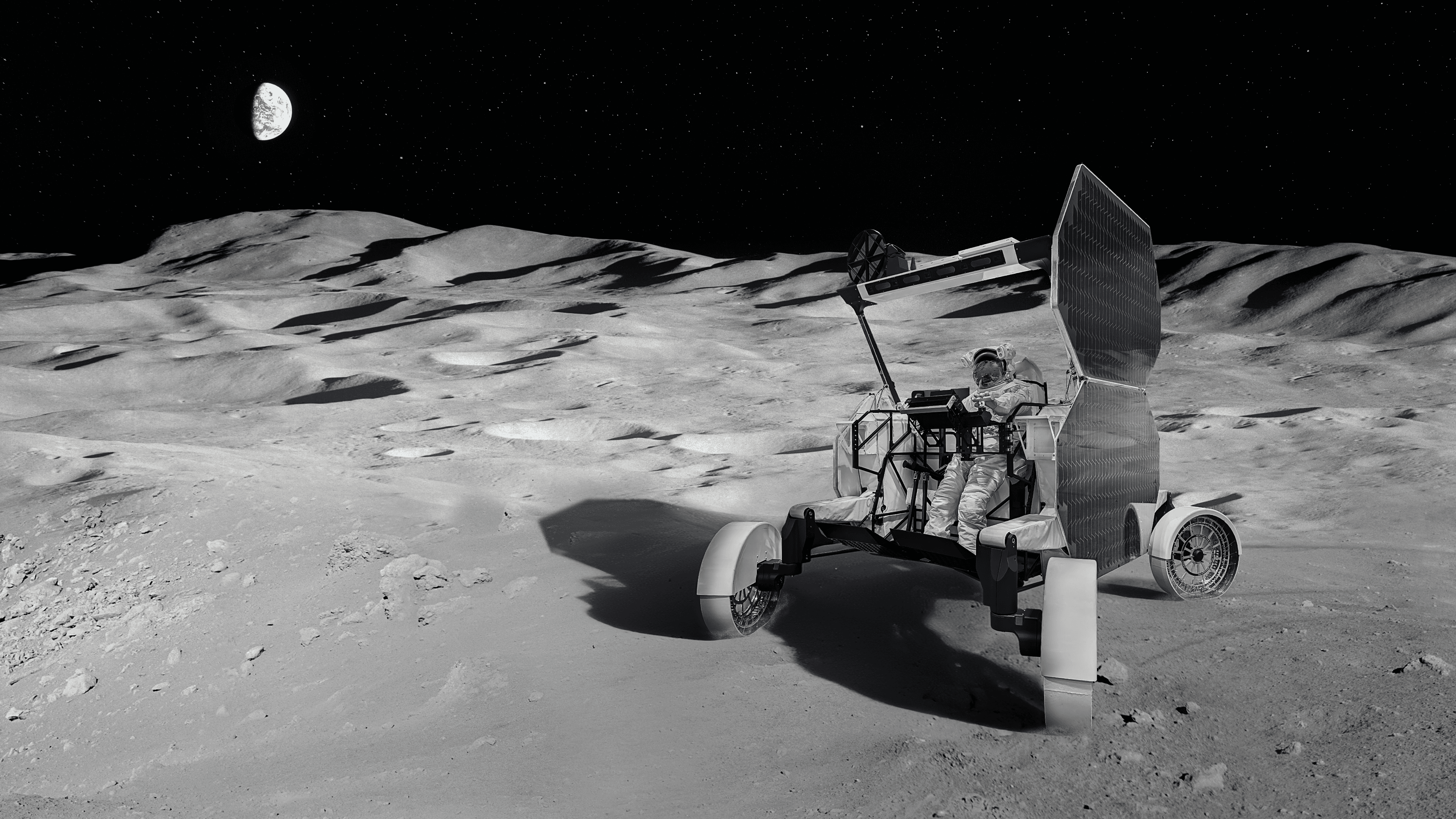
Astrolab is pioneering the commercial lunar economy with the FLEX (Flexible Logistics & Exploration) rover, a multipurpose planetary rover designed to extend humanity's presence in the solar system. Founded in 2020, the company has maintained a singular focus on designing, building, and operating a fleet of rovers that will enable sustained lunar operations.
Thomas Pech, Senior Robotics Software Engineer at Astrolab, develops autonomous navigation and teleoperations capabilities for the company's lunar rover fleet. His responsibilities encompass localization, perception, motion planning and control, simulation, ground software, and training as a rover driver. These systems are critical for FLIP (FLEX Lunar Innovation Platform), Astrolab's first rover, which is scheduled to land at the Lunar South Pole no earlier than the third quarter (Q3) 2026 as part of Astrobotic’s Griffin Mission-1.
Calibration for Extreme Environments
Developing flight-qualified autonomous systems for lunar surface operations demands precision that far exceeds terrestrial robotics. Communication delays between the Earth and Moon make real-time teleoperation impractical. Rovers must navigate autonomously, making split-second decisions based on sensor data calibrated to exacting standards.
Traditional approaches to multi-sensor calibration posed significant risks. Building a proprietary calibration pipeline with comprehensive validation metrics would require substantial engineering effort and extend development timelines. For a lean organization preparing for lunar mission operations under aggressive schedules, the traditional approach would necessitate a diversion from flight-critical system development.
Thomas recalls his thinking: "As a small space company operating under aggressive development schedules, the ability to redirect engineering resources toward flight-critical systems while maintaining rigorous calibration standards represented clear strategic value."
"With MetriCal, we can confidently validate that our multi-sensor fusion algorithms receive accurately calibrated inputs, which is a prerequisite for the autonomous hazard detection and terrain-relative navigation capabilities required for safe lunar surface operations."
- Thomas Pech, Senior Robotics Software Engineer
Engineering for Moonshots
Rather than develop calibration infrastructure in-house, Astrolab partnered with Tangram Vision to leverage purpose-built calibration expertise. This decision allowed them to maintain their focus on planetary rover development.
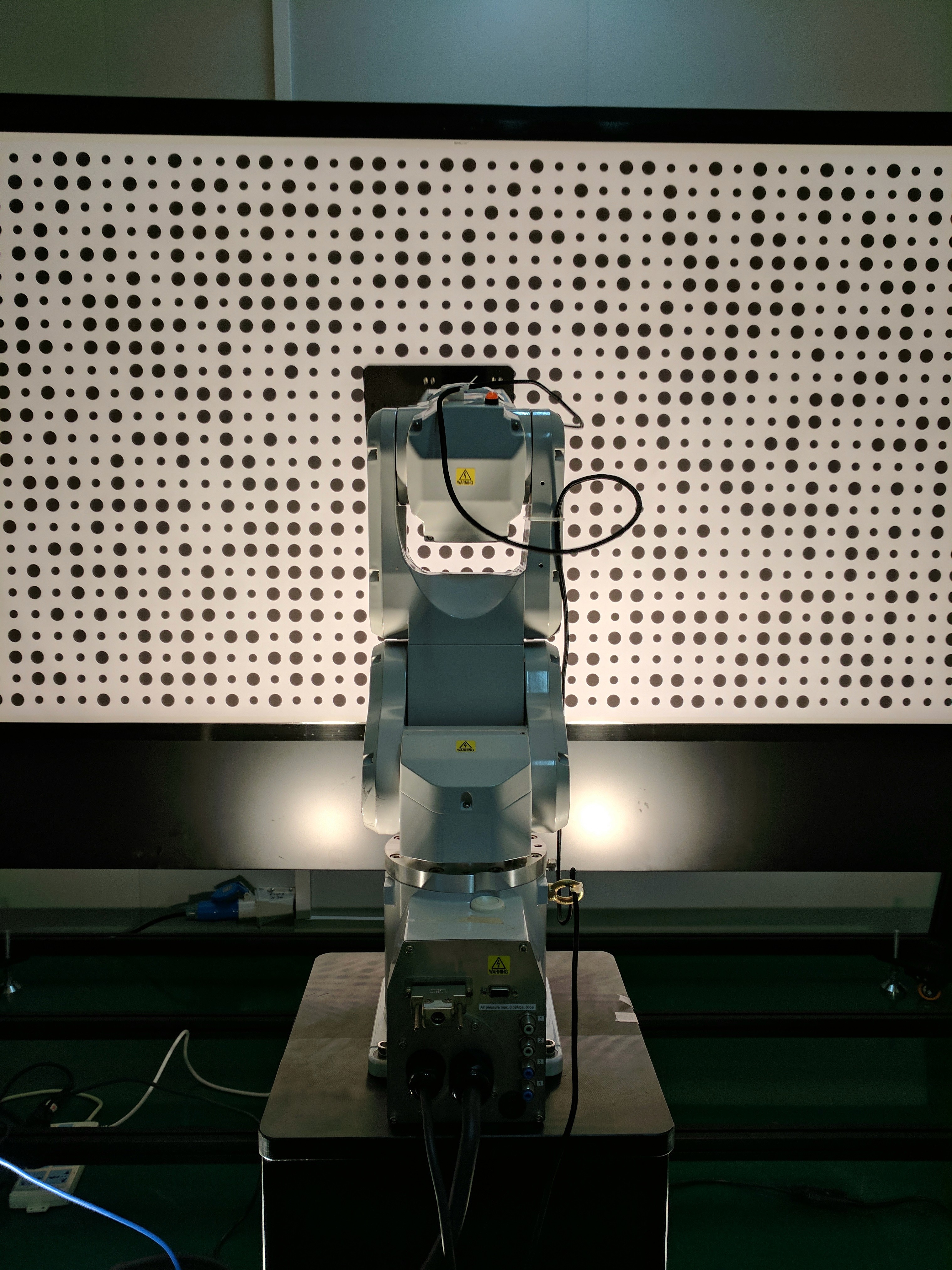
The team utilizes MetriCal to characterize and calibrate their complete perception sensor suite, including multi-camera stereo systems, LiDAR sensors, and inertial measurement units. The platform generates both intrinsic parameters for individual sensors and precise extrinsic transformations defining spatial relationships across the sensor array. As the vehicle platform matures, Astrolab is evaluating integration of wheel odometry calibration to further enhance localization and navigation performance.
MetriCal is integrated throughout Astrolab's development and production workflows. During the engineering development phase, the platform establishes baseline calibration parameters and validates sensor integration. As the team transitions toward flight vehicle production, calibration becomes a critical step in assembly, integration, and test processes.
Looking ahead to lunar surface operations, Astrolab is actively exploring in-situ recalibration capabilities. The ability to recalibrate perception systems on the lunar surface could prove essential for maintaining optimal performance throughout extended mission operations in the harsh lunar environment.
Rapid Deployment
A key advantage has been MetriCal's accessibility. The platform's intuitive interface and comprehensive documentation enabled rapid onboarding. New team members achieve proficiency with the calibration pipeline within a minimal training period. This streamlined onboarding process has been particularly valuable as Astrolab's team scales to support the 2026 FLIP mission milestones.
Thomas notes the efficiency gains: "Drawing from prior experience developing camera calibration pipelines using open-source tools, I can attest that MetriCal's maturity and feature depth deliver substantial efficiency gains, particularly in calibration parameter validation."
For mission-critical lunar operations, quantifying calibration accuracy with high confidence is essential. MetriCal provides comprehensive accuracy metrics out of the box, eliminating what would otherwise require significant custom development effort. This allows Astrolab's team to focus on system-level integration rather than calibration infrastructure development.
"Partnership with Tangram Vision has measurably accelerated our perception system development timeline and given us confidence in the calibration foundation underlying our lunar surface operation."
- Thomas Pech, Senior Robotics Software Engineer
Mission-Ready Calibration
By eliminating the need to develop proprietary calibration infrastructure, Astrolab maintained focus on core development priorities during a critical phase of vehicle maturation. MetriCal's ready-to-deploy capabilities allowed the perception team to immediately validate sensor configurations rather than diverting cycles to tooling development. This efficiency has been instrumental in maintaining the aggressive timeline toward the 2026 FLIP mission.
The platform has also provided valuable insights into calibration optimization. The team now has a quantitative understanding of achievable calibration precision, which enables informed engineering tradeoffs and helps identify diminishing returns in calibration procedures.
With the first lunar surface deployment scheduled for Q3 2026, the calibration parameters generated through MetriCal will directly underpin perception systems the rover relies upon for navigation, hazard avoidance, and scientific payload operations at the Lunar South Pole.
Thomas summarizes the partnership: "The combination of a mature, production-ready calibration platform and exceptional technical support has been invaluable to our program. This partnership has measurably accelerated our perception system development timeline and given us confidence in the calibration foundation underlying our lunar surface operations."
In Their Words

Thomas Pech
Senior Robotics Software Engineer
Thomas develops autonomous navigation and teleoperations capabilities for Astrolab's lunar rover fleet, encompassing localization, perception, motion planning and control, simulation, ground software, and rover driver training. His work is critical to successful operations during FLIP mission activities at the Lunar South Pole in Q3 2026.
Astrolab is on a mission to move humanity forward to the next horizon by designing, building, and operating a fleet of multi-purpose rovers for all planetary surface needs. Formed by a highly specialized team of NASA veterans, former SpaceXers and JPL engineers, Astrolab is laser-focused on providing adaptive mobility solutions essential for life beyond Earth. The team has industry-leading experience in terrestrial and planetary robotics, electric vehicles, human spaceflight, and more. Astrolab’s depth of experience and strategic partnerships with a wide array of world-class institutions enables the delivery of Lunar and Mars mobility offerings at maximum reliability, flexibility, and cost effectiveness.
Read More MetriCal Case Studies