
Automating Airport Operations
How Pattern Labs built production-ready calibration workflows with MetriCal
Autonomous Airport Infrastructure
Key Takeaways
MetriCal provided Pattern Labs with a calibration foundation that handles non-standard sensor orientations and vehicle configurations that other tools couldn't support
Pattern Labs is evolving their calibration workflow from development-focused bench testing toward production deployment with contract manufacturers
The company is moving toward operational autonomy by building calibration systems that field technicians can run without deep expertise in multi-sensor systems
The Mission
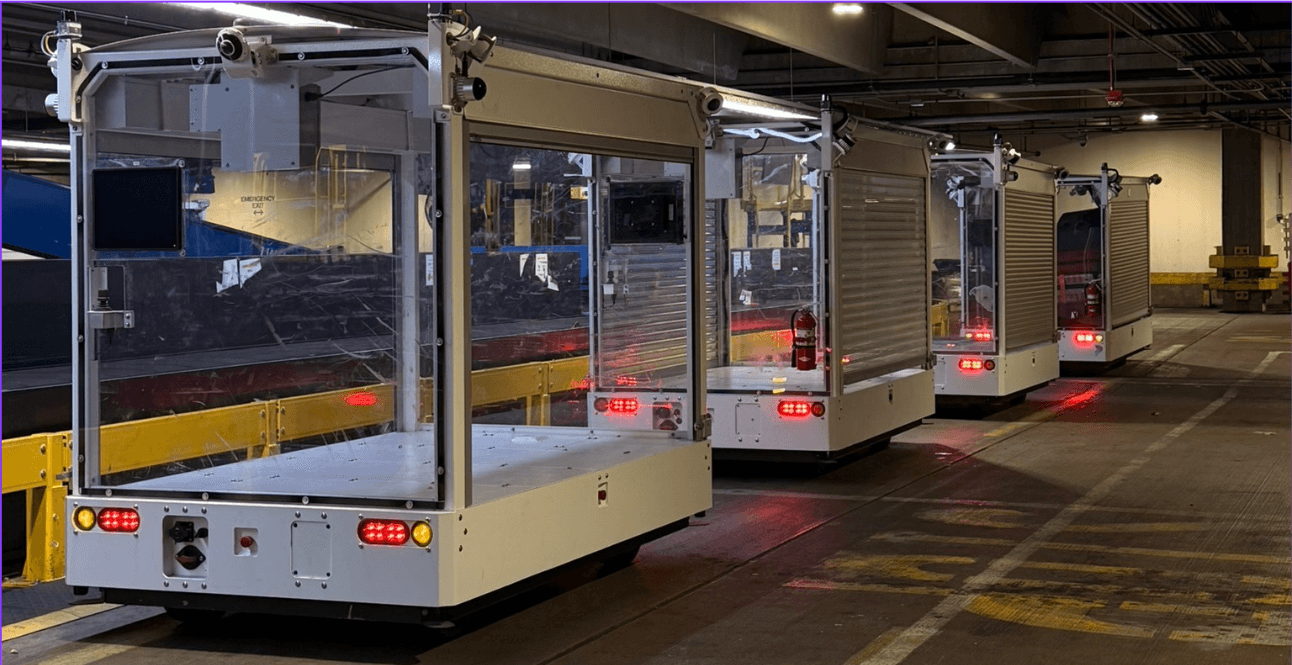
Airport operations face increasing pressure to improve efficiency, safety, and operational continuity in all weather conditions. Pattern Labs, aka Pattern, builds autonomous vehicles designed to support these critical airport operations across diverse and challenging environments.
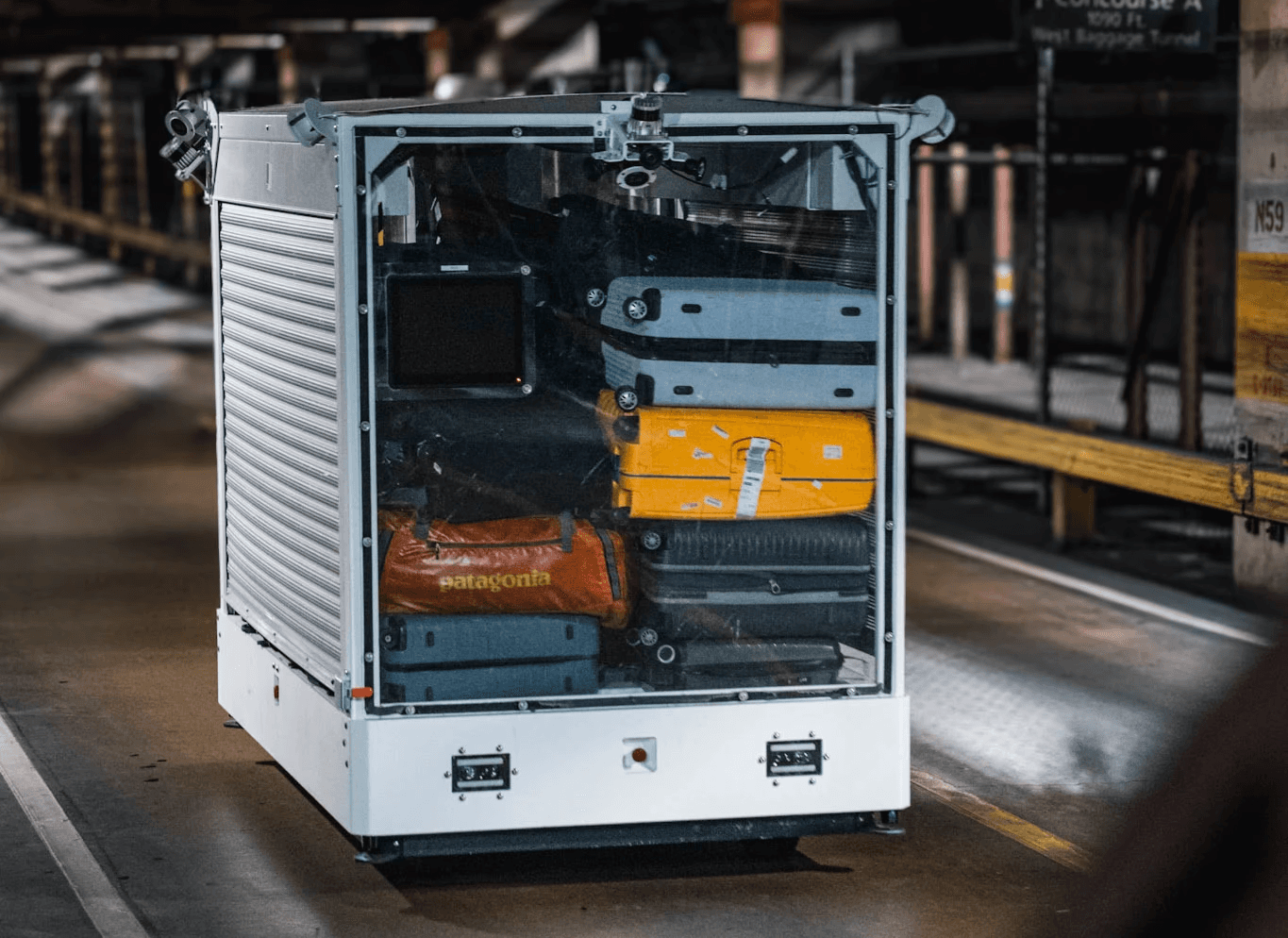
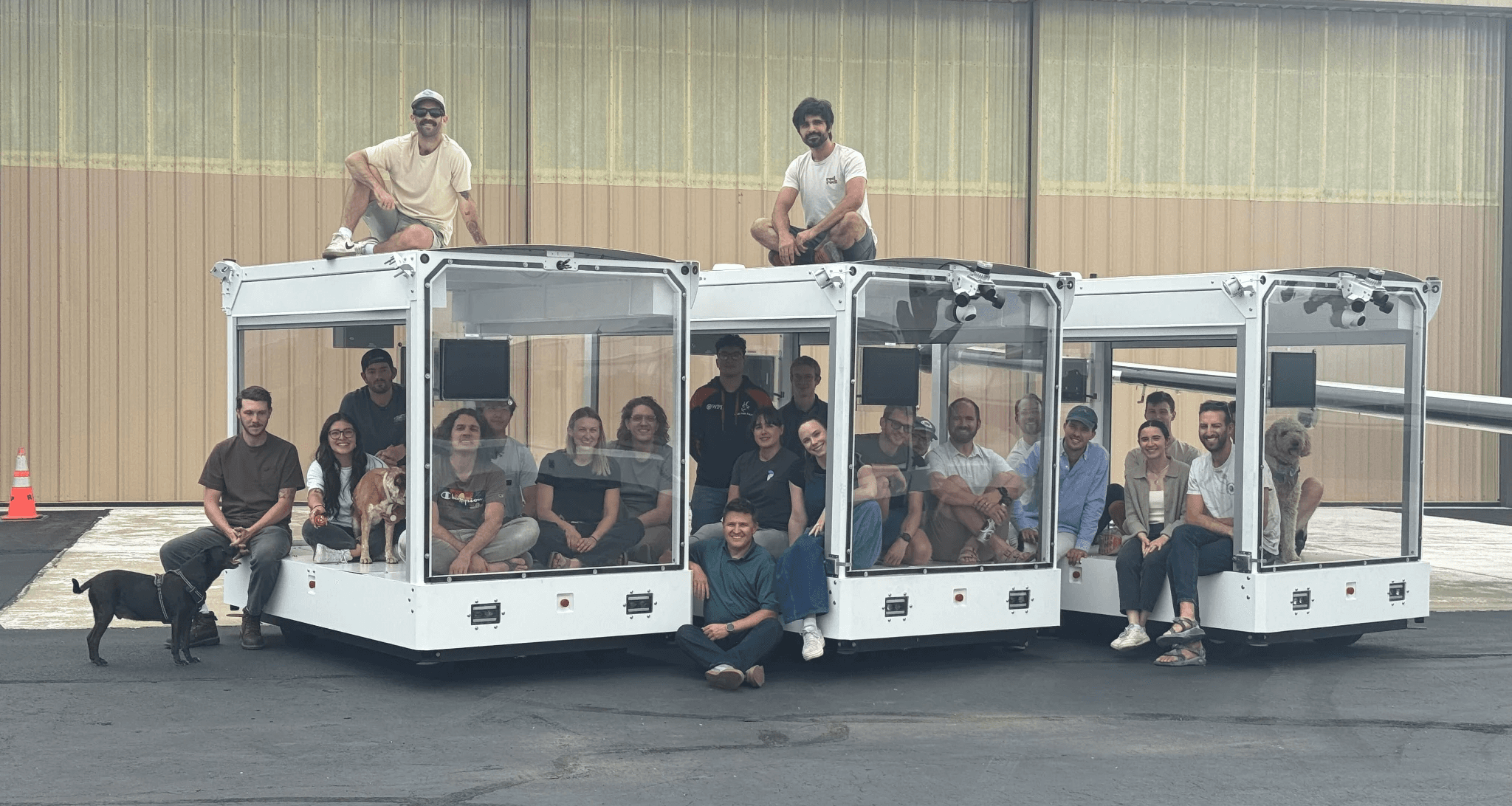
Founded in 2021 and based in Boulder, Colorado, Pattern operates a fleet of autonomous ground vehicles equipped with sophisticated sensor arrays, including multiple LiDAR units, cameras, and other emerging technologies. As John Pratt, Co-Founder and CTO, explains, creating an automated tug from scratch wasn’t an easy approach: "The biggest challenge we face as an organization is getting something that is effective, reliable, and easy to run in operations."
The company's team has been progressing quickly through challenging operational environments, but scaling from development to production requires calibration infrastructure that works reliably in the field, not just on the engineering bench.
The Challenge
The vehicle sensing architecture at Pattern was beyond the capabilities of what existing calibration tools could handle. With sensors positioned in non-standard orientations around a large vehicle platform, conventional calibration approaches created serious friction in their development process. As John Pratt describes, the team was constantly working around key limitations: "The results [from other calibration tools] were really inconsistent and required a lot of specialized knowledge."
This created a bottleneck in Pattern's goal to transition from development to operations. They needed calibration that could deliver three critical capabilities:
Reliability: Consistent results across calibration sessions without requiring deep expertise
Flexibility: Support for non-standard sensor configurations and orientations
Operational readiness: Tools that field technicians could execute, not just perception engineers
For a company moving rapidly toward deployment, calibration couldn't remain a specialized engineering task. It needed to become a repeatable operational procedure.

Finding the Right Partner
Pattern Labs discovered Tangram Vision through LinkedIn and was one of the first ever to employ MetriCal for their operations. After evaluating MetriCal, Pattern integrated Tangram Vision's calibration engine into their primary sensor head calibration workflow. The platform now supports calibration between different sensors around the vehicle, handling the LiDAR-to-LiDAR calibrations for their three-unit array and integrating cameras into the system.
"Some of our core technologies rely on accurate calibration. With Tangram Vision, we have much better calibration than we did previously, and our system is working better as a result."
- John Pratt, Co-Founder and CTO
Pattern currently uses MetriCal in both development and production environments, though it is exclusively operated by their internal team. The long-term vision extends much further: integration with contract manufacturers building subsystems, deployment across final assembly operations, and use in field maintenance.
The journey toward that goal has revealed the complexity of production-scale calibration. Rather than viewing calibration as a one-time engineering problem to solve, they're treating it as a system that must evolve from bench testing to seamless operational deployment. MetriCal provides the technical foundation, while Pattern Labs builds the surrounding infrastructure needed for their specific production and field requirements.
The Path Forward
Pattern's use of MetriCal reflects a broader industry challenge: the gap between development-phase calibration and production-ready systems. Their work with Tangram Vision has provided accurate calibration that enables their core autonomous technologies to function reliably.
As John notes: "We've tried hard to move from development to operational focus as early as possible. That means we need something that works well enough for the perception and localization but can be used by a field technician."
Looking ahead, Pattern continues refining their calibration workflows with an eye toward full production deployment. Their experience highlights that calibration isn't just a technical problem but an operational one; the tools must work not only for perception engineers but also for the technicians and contract manufacturers who will ultimately execute these procedures at scale.
In Their Words

John Pratt
Co-Founder and CTO
John leads technology development at Pattern Labs, overseeing the autonomous systems that enable safe and reliable airport operations. With a focus on transitioning from development to operational deployment, John works to ensure Pattern Labs' vehicles can be maintained and calibrated by field technicians, not just specialized engineers.
Pattern Labs builds automation tools that support airport operations through autonomous ground vehicles. The company operates in challenging operational environments, deploying vehicles equipped with multi-modal sensor systems including LiDAR, cameras, radar, and thermal imaging. Founded in 2021, Pattern Labs focuses on building systems that are production-ready and operational rather than purely development-focused, working to scale autonomous capabilities across diverse airport environments.
Read More MetriCal Case Studies